What is Light? Why is the Sky Blue?
“We begin with light.[..] Light is like raindrops, each drop is called a photon and all the raindrops are of the same size. When we say light, we mean all aspects of light.”
– Richard Feynman
Light is more than just light.
- Light is a form of electromagnetic radiation and can be detected by the human eye.
- Some electromagnetic radiation is visible to us, while much of it is invisible, because visible light is just a small part of the electromagnetic spectrum. Light can be described by its wavelength or frequency — two ways of expressing the same property.
- As frequency increases (and wavelength decreases), light shifts from red to blue to violet, and beyond that to ultraviolet.
- If we go lower in frequency than visible light, we find infrared (heat) waves, microwaves, television, and radio waves.
All of this is light, just different numbers. And it’s made of particles.
What is light made of?
- Light is made of extremely small particles called photons which are the smallest quantity of energy that can be transported.
- Photons have no mass, and they are the carriers for electromagnetism (one of the four natural forces of the universe – we have a separate article on these forces).
- Photons exhibit both particle-like and wave-like behaviour — a concept known as wave-particle duality.
- Photons are generally considered to live forever in a space vacuum.
- Photons have no charge, but they are exchanged between charged particles, such as electrons and protons, whenever they interact.
The speed of light
- Light travels at a speed of 299,792.458 kilometers per second (people usually round up the number to 300,000 kilometres per second) in a space vacuum.
- It is the fastest known particle, and according to Special Theory of Relativity, nothing travels faster than the speed of light.
- In a vacuum, light always travels at the same constant speed. This value, denoted by c, is a fundamental constant that defines the structure of our Universe according to Einstein’s Theory of Relativity. According to Einstein, nothing travels faster than light.
(Note: Light slows down in materials like air or water.)

Why is the sky blue?
- The sky is blue because blue light is scattered more easily around the Earth’s atmosphere than red light. Light from the Sun contains all the colours of the rainbow, with red at the end. Red light has a longer wavelength than blue light, which means it doesn’t scatter as easily.
Here is where I paused and asked myself: if the red light has a longer wavelength, how come it doesn’t scatter more easily than blue?
This is due to a phenomenon called Rayleigh scattering. When light is traveling to Earth, it hits the atmosphere and interacts with molecules like oxygen and nitrogen. Rayleigh scattering is stronger for shorter wavelengths — specifically, intensity is inversely proportional to the fourth power of wavelength.
Phenomena of Light
Here are some of the phenomena of light that we can observe every day.
- Light reflects off a mirror
- Light bends from air to water
- Light goes in straight lines
- Light can be focused by a lens
- Light can be diffracted when it passes around edges or through narrow openings, which can soften shadows
Light Facts – Did you Know?
- Light always travels in a straight line and it always takes the quickest route.
- Photons cannot come to rest, they can only transform.
- Photons sometimes behave like particles and sometimes like waves.
- Newton discovered that sunlight can be split into colours and named 7 colours (ROYGBIV).
- A rainbow forms when sunlight is refracted, reflected, and dispersed through individual raindrops.
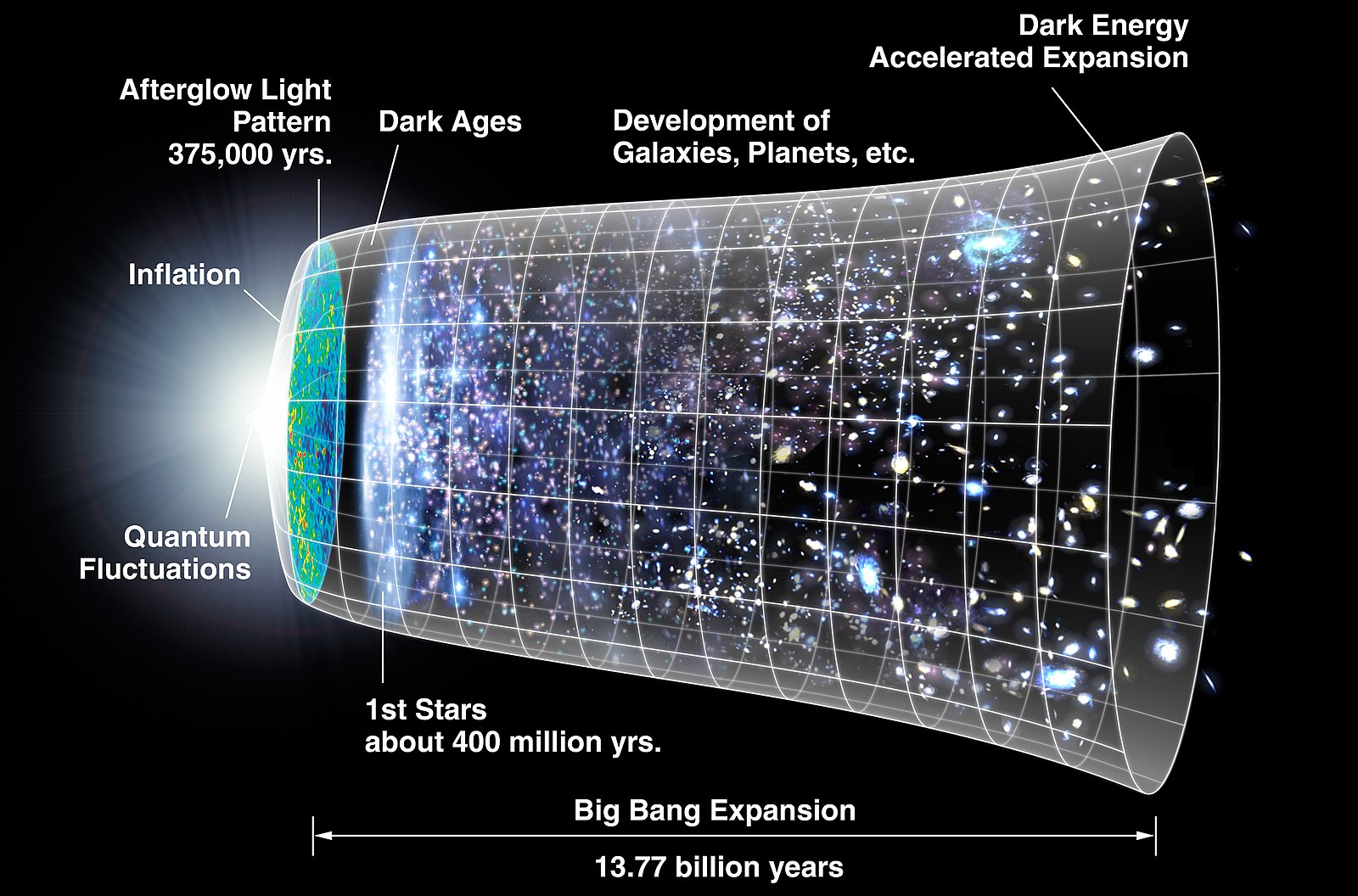
- Redshift is caused by the Universe stretching which stretches the light.
Mysteries
I enjoy reading about the mysteries of everyday life. Here are some interesting, yet unsolved activities by light:
- Why do photons travel at the speed limit?
- We understand that in space, nothing can travel faster than the speed of light. But the universe is expanding faster than light travels. Why can’t we see the edge of the Universe? Is there an edge?
- Light interacts with ordinary matter, but does not interact with dark matter.
Resources
The following books helped with my research for this article:
- A New Map of Wonders – Caspar Henderson
- Black Holes and Baby Universes – Stephen Hawking
- The Constants of Nature – John D. Barrow
- QED – the Strange Theory of Light and Matter – Richard Feynman
Thank you, I hope you enjoyed the article. Please note, I carefully research the topic before publishing, however some facts could have changed since publishing this article, so I appreciate your understanding. All articles published are thoroughly researched and inspired by published books. The list of resources are published in every article. Please be kind, and have a nice day.
Nyx Log, Stardate 25081.5