Articles

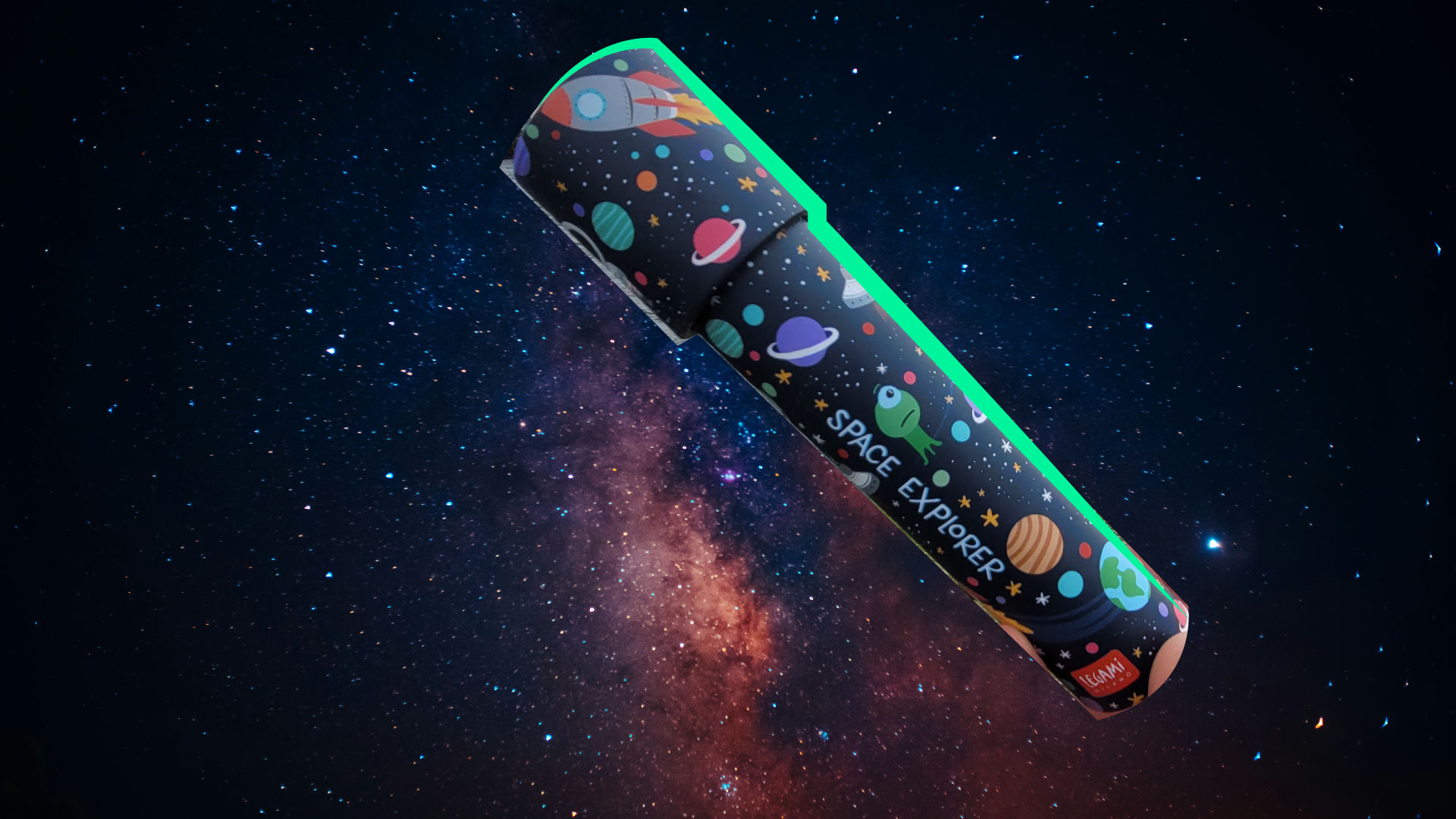
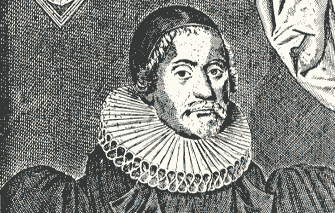
Such marvellous objects, kaleidoscopes. The beauty of geometry caught inside a simple cardboard tube. But what exactly is it? How do kaleidoscopes work, who invented and where to get a space-inspired one. What is a Kaleidoscope? A kaleidoscope is an optical instrument, often sold as a toy, through which a person sees beautiful geometric patterns and symmetries. They illustrate the image-forming properties of combined, angled mirrors. What is it made of? A kaleidoscope is made of a few simple items and is a great DIY science project. The pieces include: How Does it Work? Kaleidoscopes are simple but clever objects which provide mesmerizing views from simple objects put together. Let’s discuss how it actually works: Well, because there are multiple mirrors involved, the reflection repeats the image multiple times. These reflections join together in a symmetrical pattern. Brewster discovered that angling the mirrors at 60 degrees produced these amazing symmetrical patterns.…

Read more

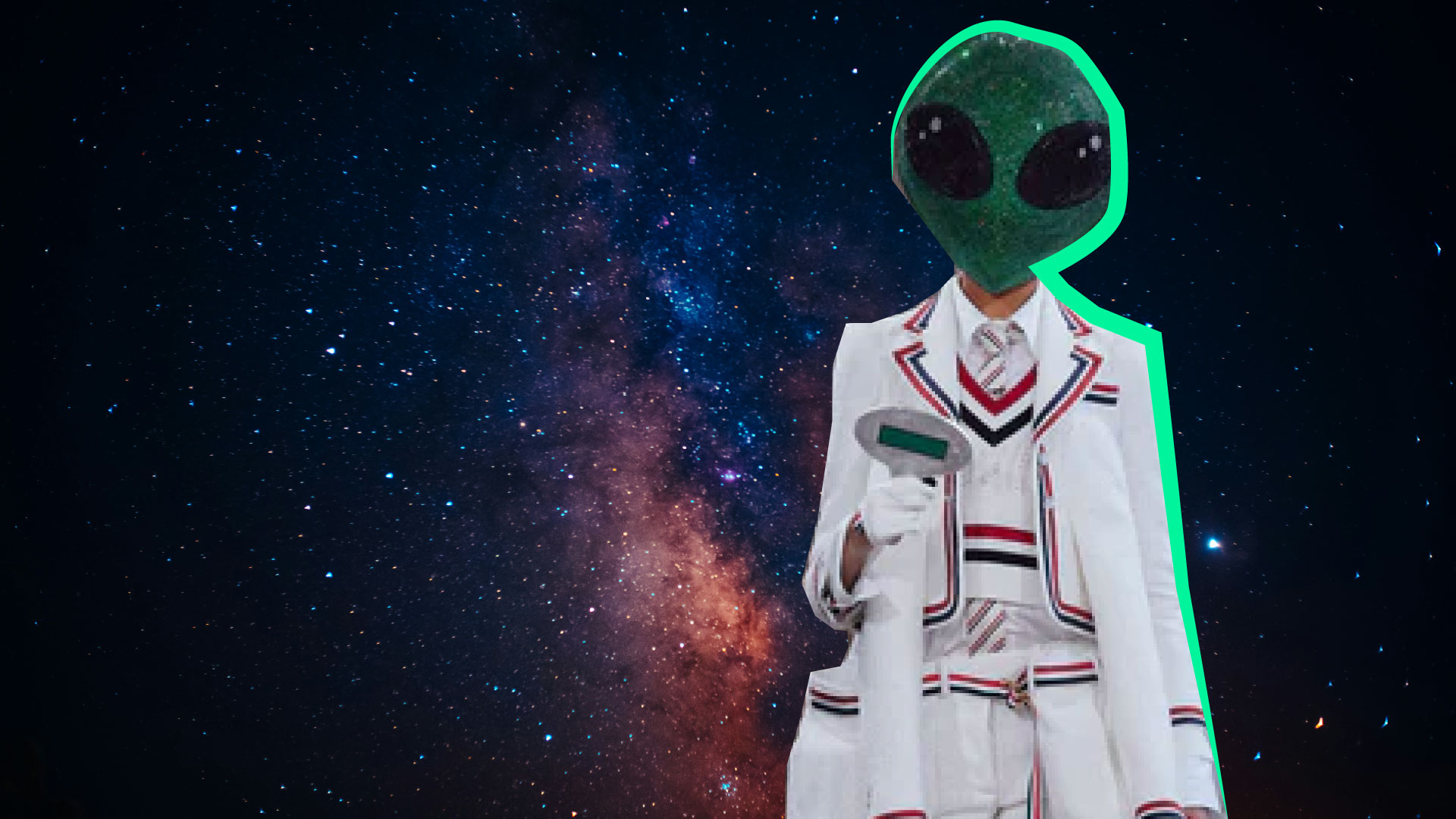
“Fashion is not something that exists in dresses only. Fashion is in the sky, in the street, fashion has to do with ideas, the way we live, what is happening.” – Coco Chanel As I write this article there is a wintery breeze outside my window, overlooking the Spanish Arch in Galway. Winters in Ireland can be rough, and we experienced powerful storms — such as Storm Éowyn in 2025, which barrelled across the island last January and quickly earned its place as one of the most powerful storms Ireland has seen in recent years. This cold breeze arriving from the Atlantic Ocean has left me longing for warmer days, and as I wait for the warmer days, one of the fashion designers caught my attention with their Spring/Summer Ready-to-Wear 2026 fashion show. Let’s talk about Thom Browne and his unique collection inspired by Space Aliens. That’s right, this is…

Read more

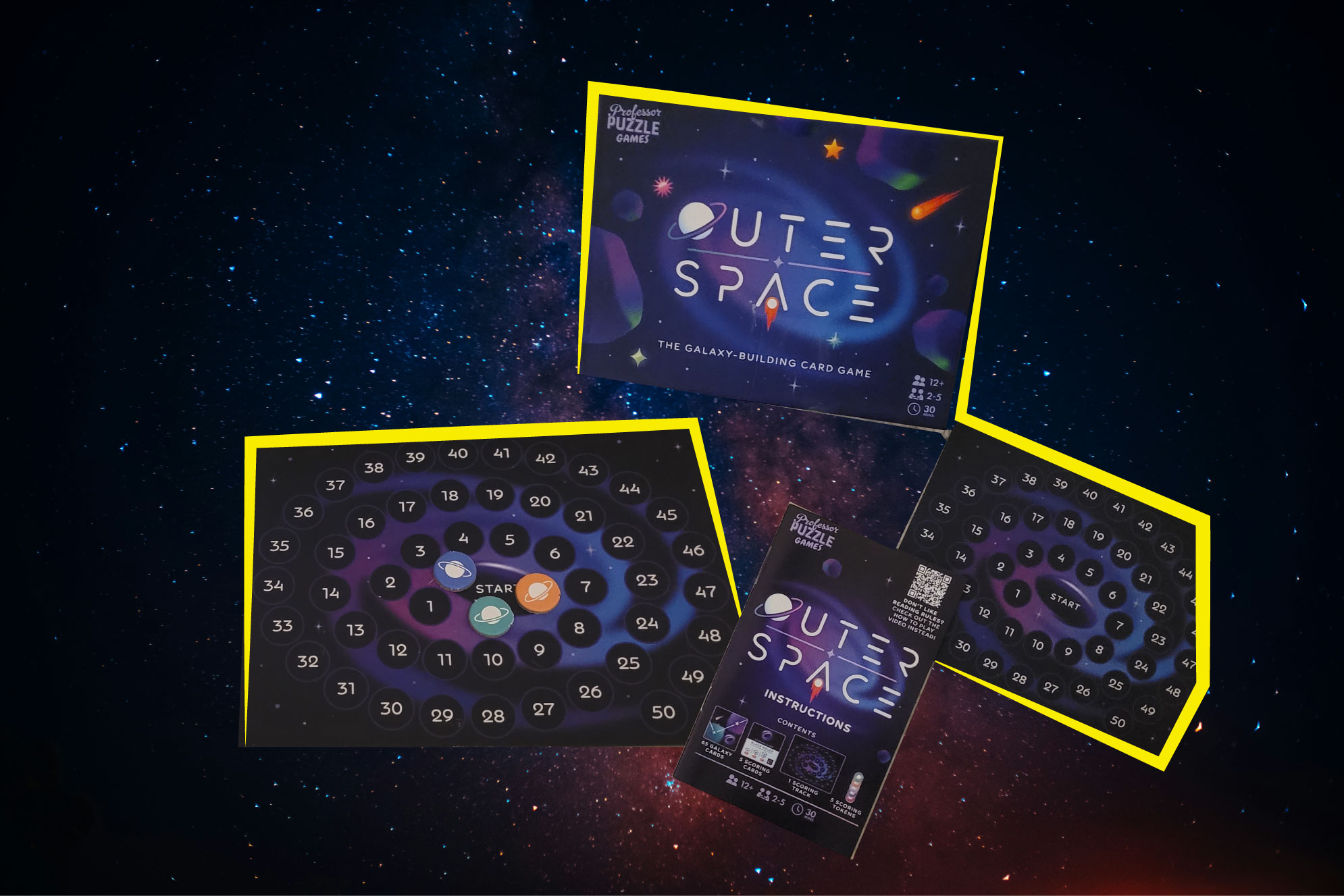
Outer Space Game Info Dive into the world of card games and explore the Outer Space with Professor Puzzle Games. Dive into this exciting Outer Space card game and build your Galaxy to win. This game is a fun stay-at-home entertainment which can be played between two or more people. I bought mine in the Art & Hobby store in Galway city and I got it on sale for less than thirteen euros. What to Expect So, what can you expect from this card game? How To Play: There is also a board on which you place a small planet icon on the Start point. Each player chooses their planet and places in the middle of the board (where the Start is). You move your object when you score points. What’s More: Here is a fun part of the game. If you place three black holes on top of each…

Read more

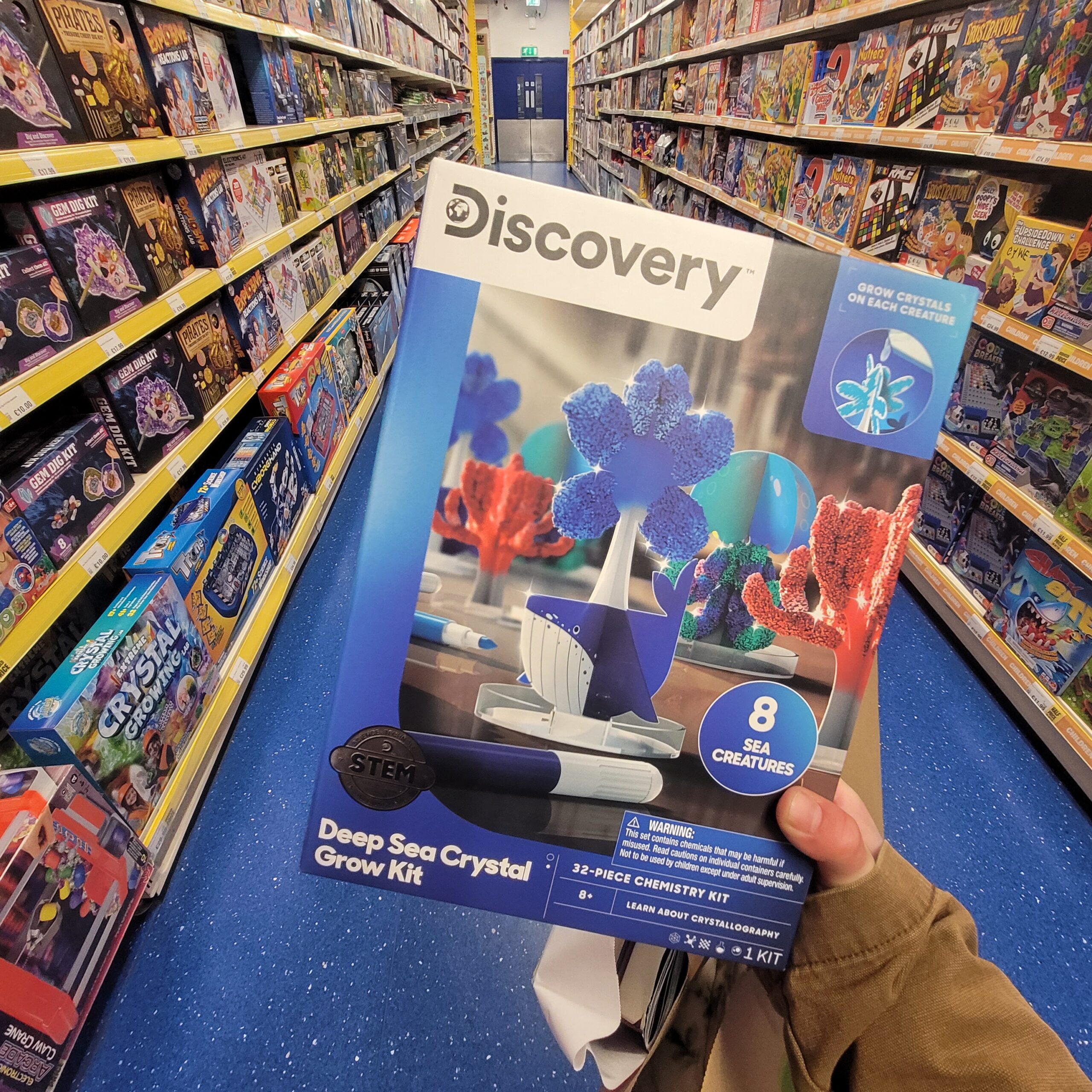
Grow Your Own Magic Crystal Coral Reef On a cool January morning I marched into Smyths Toys store in Galway city to find myself standing in front of a small science section. I noticed a Deep Sea Grow Kit for just €5 and decided to give it a try. I never imagined growing crystals or that it was even legally possible (I’m just an amateur on the subject of science, but hey, I’m learning something new every day). What does a five euro science kit box contain, you ask? Why, multiple things actually. There are 32 objects, including sea-inspired cardboard objects, petri dishes, markers as well as crystal growing solution. To be honest, it was well worth five euro, but let me tell you what happens next! Using the kit, we are going to grow crystals by pouring the growing solution on a piece of cardboard. Then we wait and watch…

Read more

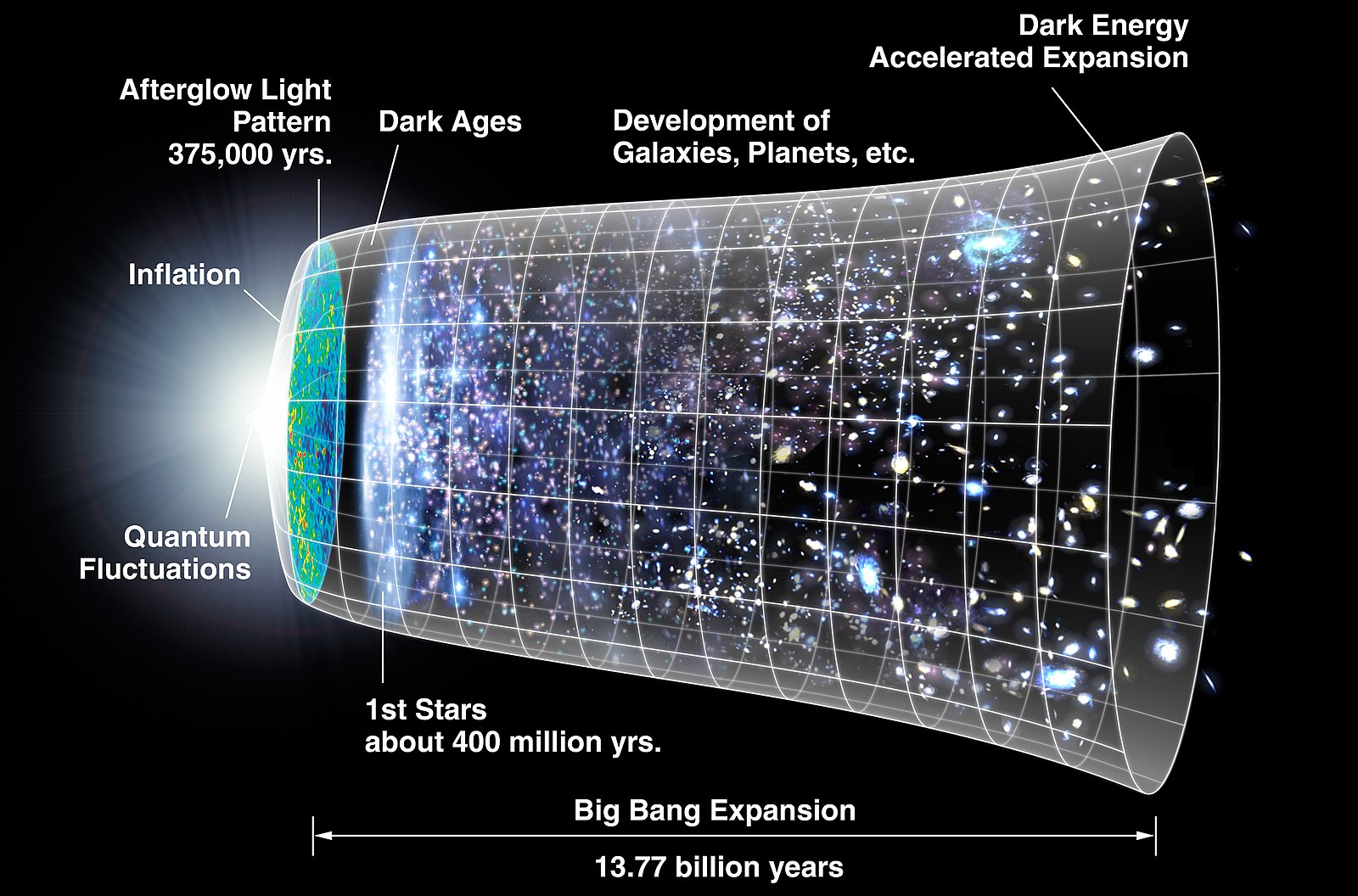
Ireland has a rich history of scientific contributions that have helped shape our understanding of the world around us. You might not have heard of many of them, or you may struggle to name a famous Irish scientist, but don’t worry, as I often publish articles inspired by the work or many brilliant Irish Scientists. Let’s talk about one of them. Let’s discuss the age of the Universe. Have you ever looked at the sky and wondered how old is the cosmos? Or when were all the stars, the Sun, the Moon, and all else born? At the present moment As of today, scientists calculated the estimate age of the universe to be around 13.8 billion years old. That is when we believe the Big explosion called the Big Bang happened an the universe came into existence. And this is what we calculated now thanks to decades of research and…

Read more

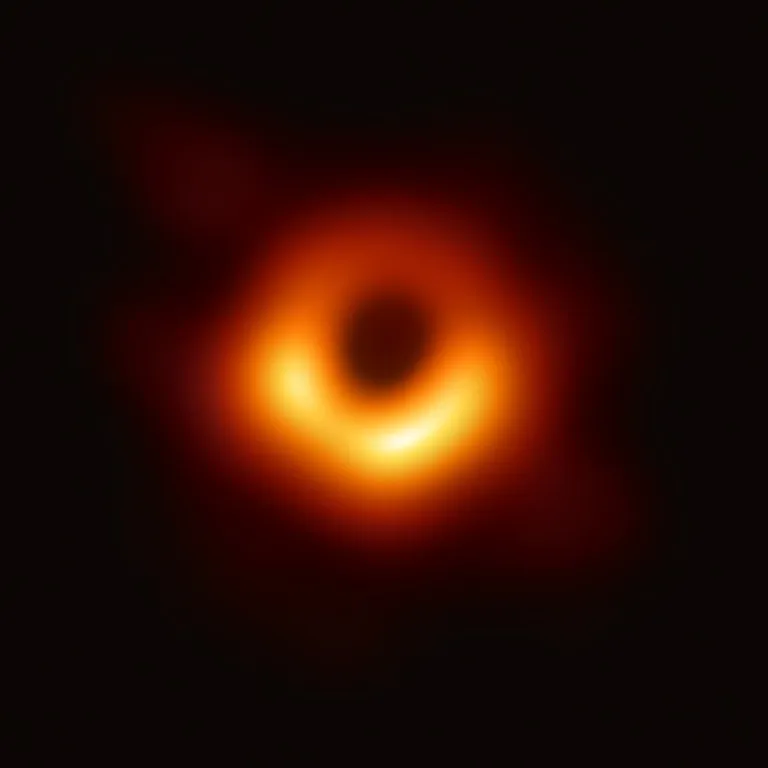
“I used to think information was destroyed in black hole. This was my biggest blunder.” Stephen Hawking What is a Black Hole? How is a Black Hole Created? It is difficult to study a black hole formation directly because once a black hole exists, information about its origin cannot easily be observed. A black hole basically destroys its own origin. However, based on theories and observations, scientists believe the following: In the book Black Holes and Baby Universes, Stephen Hawking explains that when a black hole is created, it rapidly settles down and becomes a stationary object. Black holes are characterised by three parameters: This idea is known as the no-hair theorem. How Can We Detect Black Holes? There are ways to detect if what we are seeing in space happens to be a black hole: We can also use other types of methods for measuring the mass of a…

Read more

It is near the end of the year 2025, which marks 120 years since Albert Einstein published the Special Theory of Relativity. This theory was a crucial milestone in physics, demonstrating the equivalence of mass and energy, a relationship famously expressed by the equation: E=mc² Almost every book I picked up covers the topic of Special Relativity, and it is perhaps one of the most important checkboxes to tick if you are new to physics. What is Special Relativity? Special relativity was discovered because classical physics (at that present time) couldn’t explain why the speed of light is always the same—and Einstein realized space and time had to adapt. Through theoretical reasoning and experiments, Einstein explained that because the speed of light is constant, time itself must be relative. He introduced time dilation, length contraction, and mass–energy equivalence, which together led to one of the most famous equations in physics:…

Read more

“Symmetry, once broken, still leaves a trace. That trace is what we see in the laws of nature.” – Salam on the role of symmetry breaking in unified theories. What are Grand Unified Theories? Grand Unified Theories (or GUT for short) are theories which try to merge the three of the four fundamental forces of nature – the strong nuclear force, the weak nuclear force and electromagnetism into one unified theory. These GUTs are theories take us furthest back in time. Why? Because each one is an attempt to show that the three basic forces of nature – the strong, weak, and electromagnetic interactions – which govern the behaviour of all matter, were once unified into a single force (a so called “Superforce“) in the earliest moments after the Big Bang. Who Proposed the GUT? GUTs were not invented by one single person. These theories are a result of contributions…

Read more

The story of gravity is deeply tied to Einstein’s Theory of Relativity (1915-1916). Einstein realized that the gravitational field is not something separate from space — it is the curvature of spacetime itself. Even after more than a century, General Relativity remains our best theory of gravity. What is Gravity Made of? What is the Purpose of Gravity? When that balance fails, the star collapses — sometimes forming a black hole, where gravity becomes so strong that not even light can escape. Some Phenomena of Gravity Newton’s Law of Gravitation – Is it Correct? Well, Newton was born before Einstein, and back then people believed that space was flat. So did Newton. But that doesn’t mean he hasn’t contributed the the work on gravity. His work and formula needed to be updated or enhanced. As Richard Feynman said in Six Easy Pieces: “Newton’s law of gravitation is not correct. It…

Read more

“For my part, I know nothing with any certainty, but the sight of the stars makes me dream.” Vincent van Gogh Today we’re exploring the fascinating world of stars. On a clear night, we can see countless stars in the sky. Some shine brightly, while others appear dim, like a sprinkle of cosmic dust that gently illuminates the night. What is a Star? Check out my full video of this article below, or scroll down to continue reading the article. How are Stars Born? When a Star Dies Eventually, every star will die. As thermodynamics teaches us, nothing lasts forever. When a star reaches the end of its life, one of three outcomes may occur, depending on its mass: Facts About our Sun Mysteries About Stars Resources The following books helped with my research for this article: Please note: I carefully research each topic before publishing; however, some facts may…

Read more

“We begin with light.[..] Light is like raindrops, each drop is called a photon and all the raindrops are of the same size. When we say light, we mean all aspects of light.” – Richard Feynman What is light? Light is more than just light. All of this is light, just different numbers. And it’s made of particles. What is light made of? The speed of light Why is the sky blue? Here is where I paused and asked myself: if the red light has a longer wavelength, how come it doesn’t scatter more easily than blue? This is due to a phenomenon called Rayleigh scattering. When light is traveling to Earth, it hits the atmosphere and interacts with molecules like oxygen and nitrogen. Rayleigh scattering is stronger for shorter wavelengths — specifically, intensity is inversely proportional to the fourth power of wavelength. Phenomena of Light Here are some of…

Read more

“A mystery is only a mystery as long as it remains uninvestigated, sir.“ – Data, Star Trek: The Next Generation What Is Time? In everyday life here on Earth, time can be seen as an invisible straight arrow on which we track when events in our lives occur. Our clocks measure how long an event lasts using familiar units like seconds, minutes, and hours. Time vs. Spacetime It’s important to understand that time is viewed differently in science. “What we have to do is treat time as an additional dimension. Space has three dimensions: left-right, up-down, and forward-backward. When we try to add time into space, we create four coordinates and a four-dimensional space.” Why do we treat time as a dimension? When Did Time Begin? No one knows exactly when time began. No scientist found the origins of time. And humans weren’t handed a cosmic manual on how to…

Read more

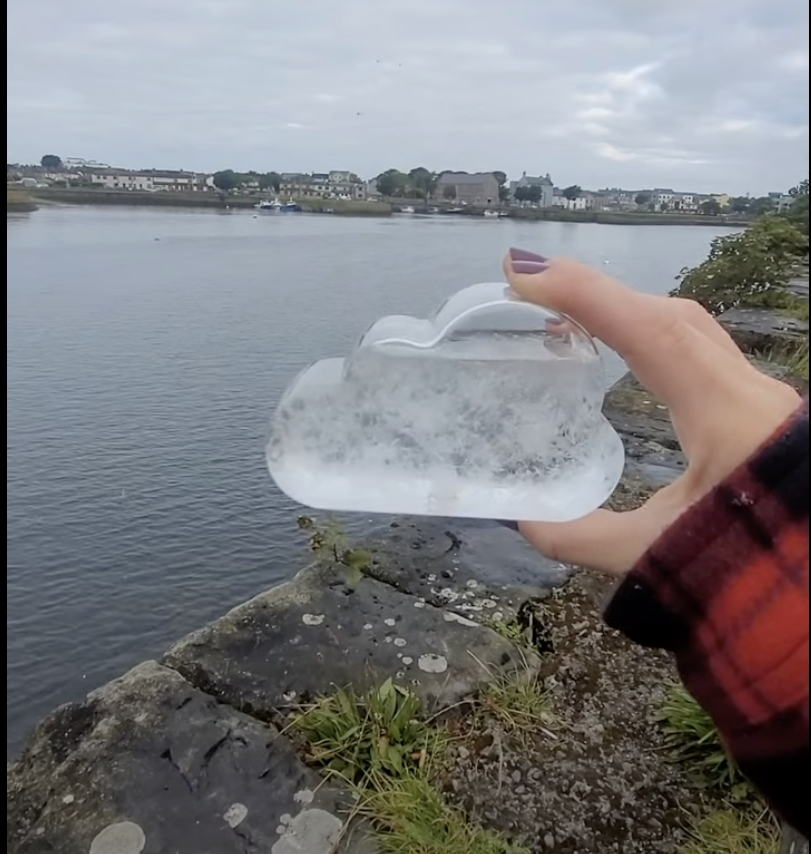
Long before the popular TV source RTÉ – and even further back, before the 17th century—people relied on keen observation to predict the weather. Changes in cloud formations or wind direction were often key natural indicators of what was to come. What is a storm glass? A storm glass is a glass container that is sealed and filled with water and chemicals, and demonstrates a chemical process of crystallisation. The storm glass was used to predict weather changes based on the appearance of the crystals inside the container.  What is it made of? The liquid in a storm glass is a mixture of various ingredients, often containing distilled water, ethanol, camphor, ammonium chloride, and potassium nitrate.  Who Invented the Storm Glass? The credit goes to Robert FitzRoy, an English Meteorologist and Officer of the Royal Navy. Although a device similar to this was already developed 2 decades before, and the…

Read more

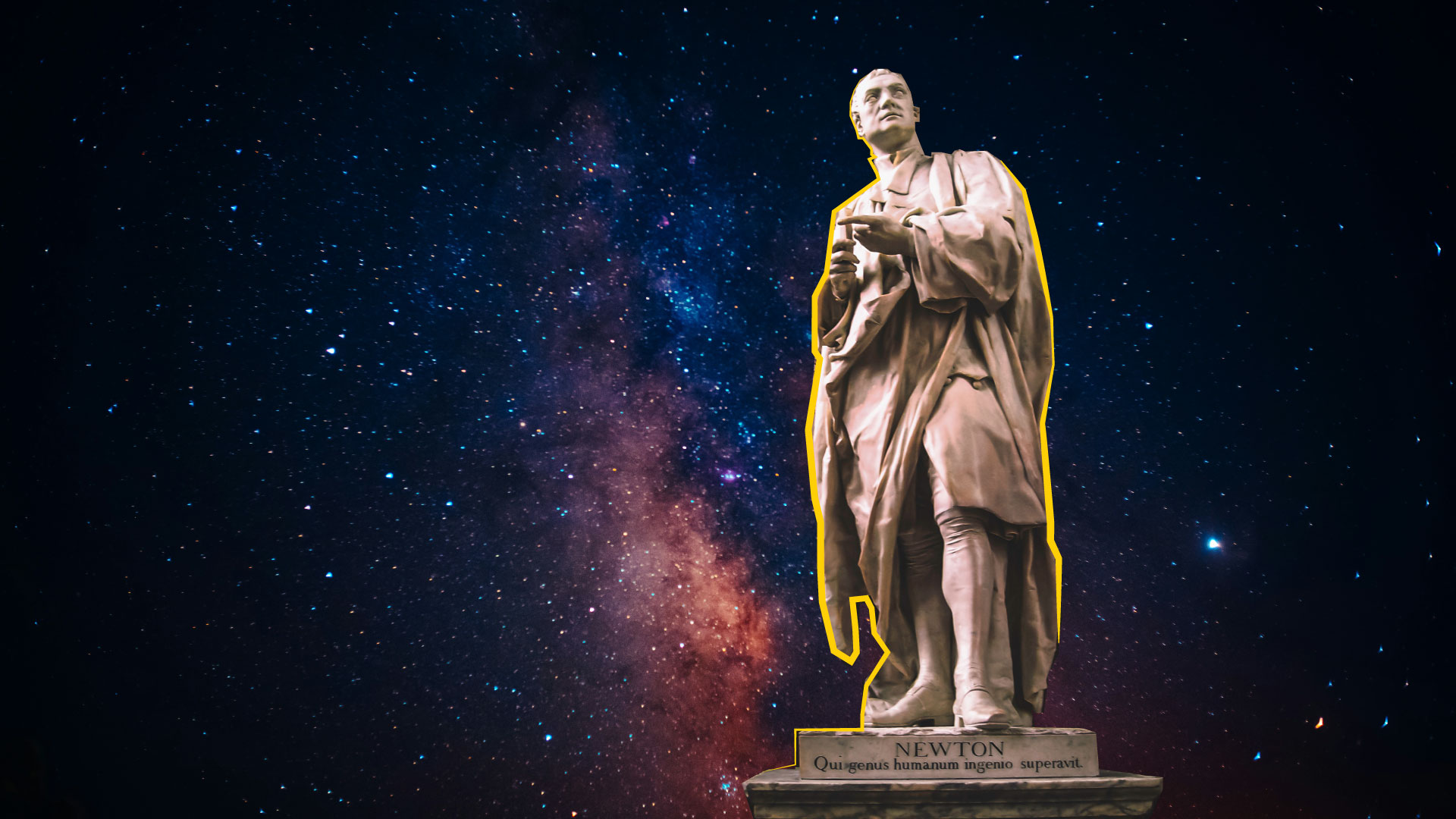
“No great discovery was ever made without a bold guess.” – Isaac Newton Top Facts about Newton: Sir Isaac Newton Newton’s Work Sir Isaac Newton’s past is overflowing with achievements throughout many fields, such as physics, mathematics and optics. Here are some of his most incredible work: Laws of Motion – Law 1 “Any object stays still or moved at a steady speed in a straight line at a constant velocity UNLESS it is pushed or pulled by a force.” In other words, an object does not move unless something forces it to (inertia) and it will go on moving at the same speed ad direction unless force to change (momentum). Laws of Motion – Law 2 The greater the mass of an object, the more force is needed to make it speed up, slow down, or change direction. Laws of Motion – Law 3 “For every action, there is…

Read more

15/15