
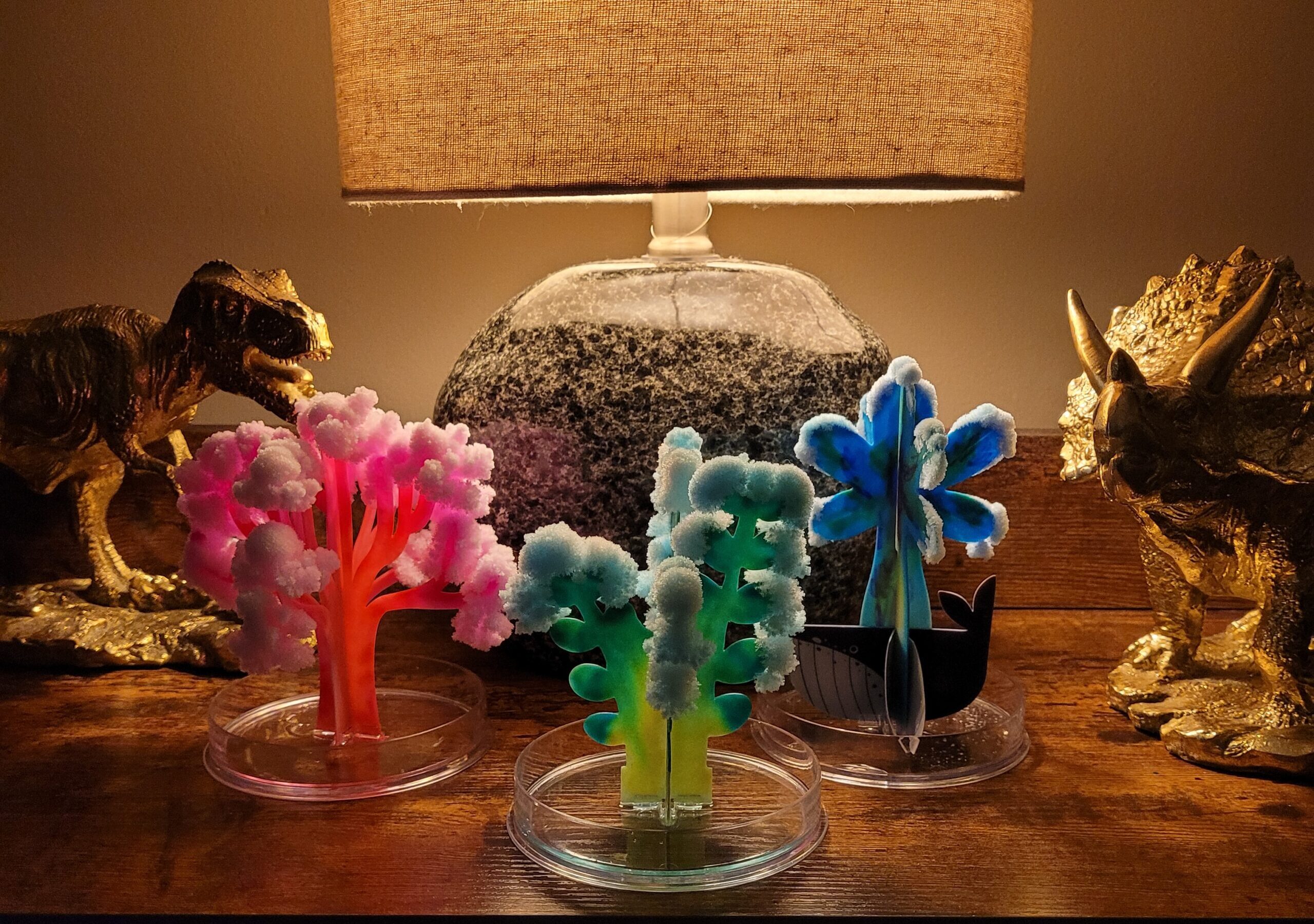
Crystal Science: Grow Your Own Magic Crystal Coral Reef
DIY Science Experiment
Topic: Crystallography
Level: Easy
On a cool January morning I marched into Smyths Toys store in Galway city to find myself standing in front of a small science section. I noticed a Deep Sea Grow Kit for just €5 and decided to give it a try. I never imagined growing crystals or that it was even legally possible (I’m just an amateur on the subject of science, but hey, I’m learning something new every day).
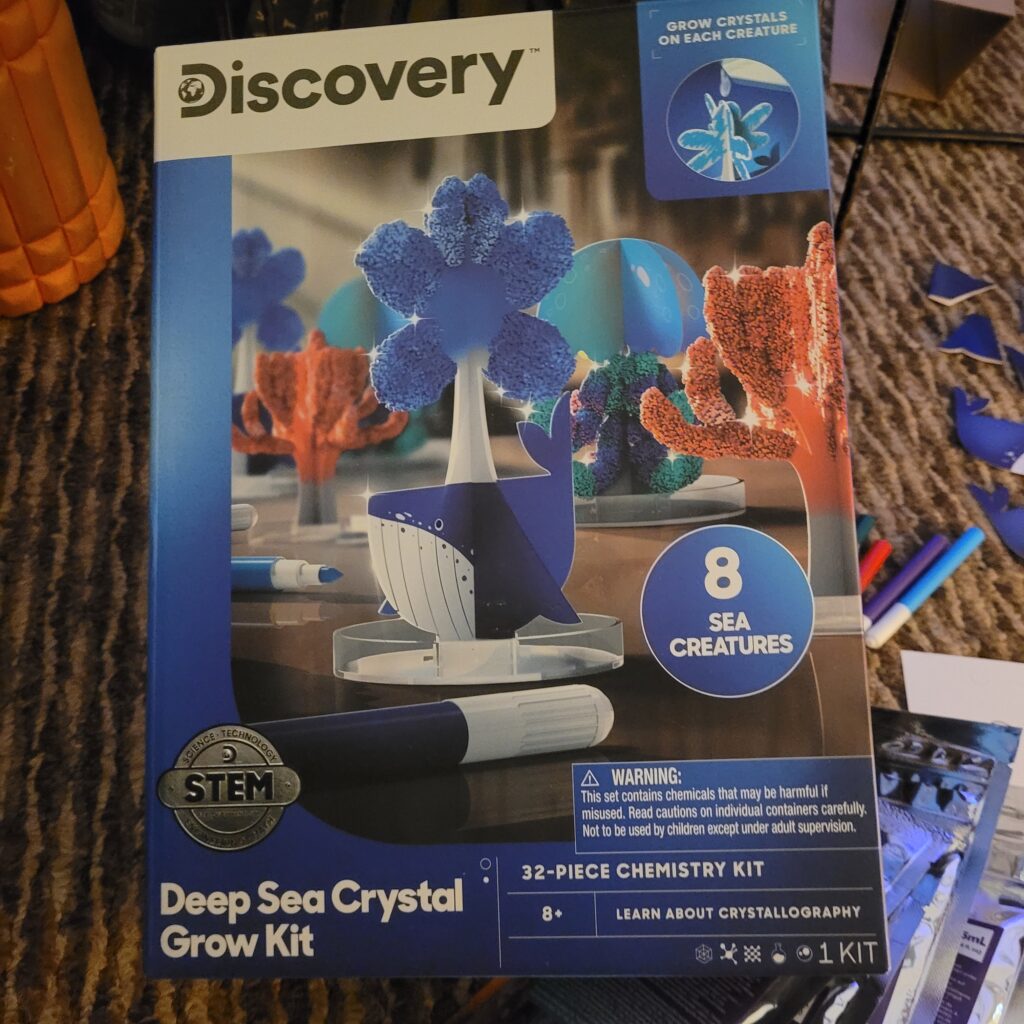
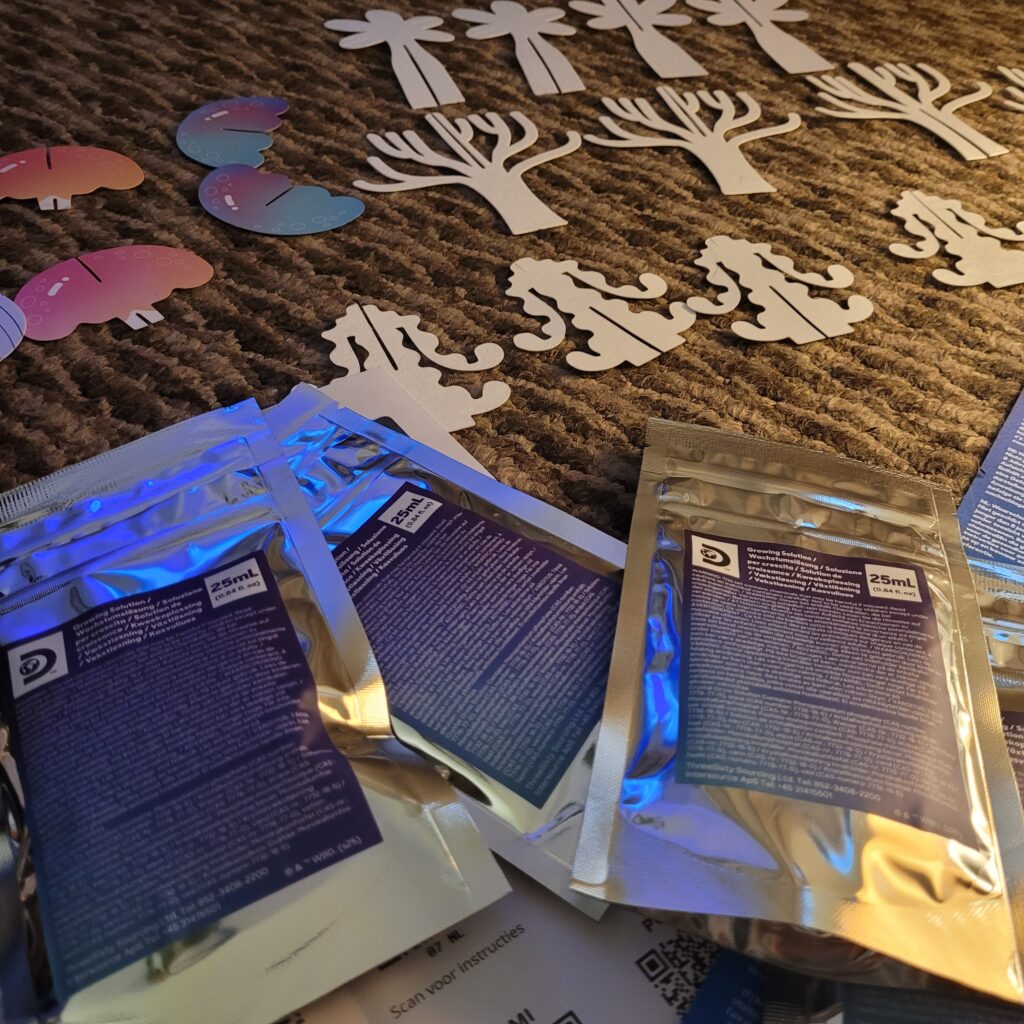
What does a five euro science kit box contain, you ask? Why, multiple things actually. There are 32 objects, including sea-inspired cardboard objects, petri dishes, markers as well as crystal growing solution. To be honest, it was well worth five euro, but let me tell you what happens next!
Using the kit, we are going to grow crystals by pouring the growing solution on a piece of cardboard. Then we wait and watch science do its magic.
How TO: Deep Sea Crystal Grow Kit;
- I first took out the cardboard pieces and markers to design them a bit. I then set up the cardboard pieces in the petri dishes. You should have 2 pieces of cardboard added into one tray.
- Then, I poured the crystal-growing solution over the cardboard pieces- this liquid substance contains potassium monophosphate, which is a great ingredient to grow crystal corals. No need to dissolve it, it is already in a liquid form.
What happens? Nothing happened in the first few hours. The box does promote crystal growth after the first 8 hours, and so I kindly waited. The next morning I wake up to my science experiment and to amazingly grown crystals.
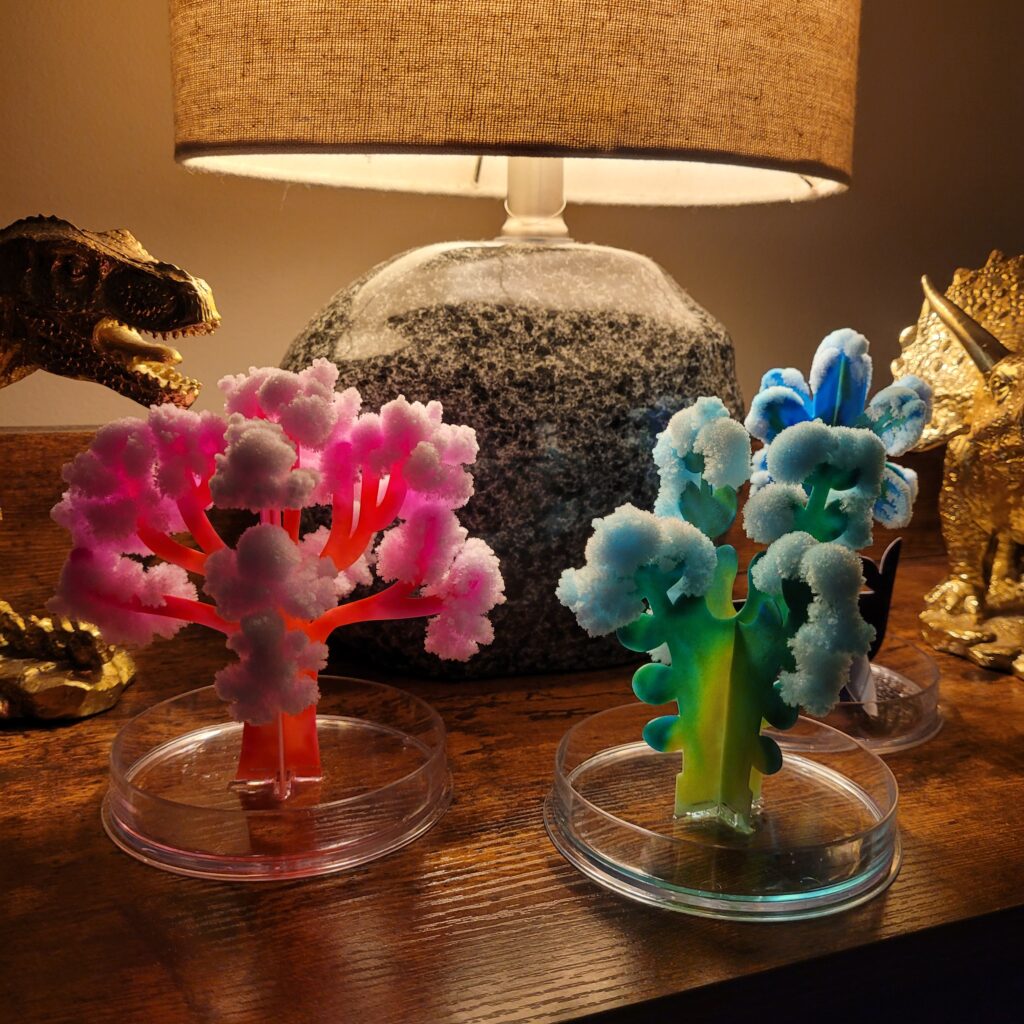
The crystal growth branched out on the edges of the cardboard. And the more liquid the petri dish contained, the bigger the growth of crystals on the cardboard.
I found very little information on the growing solution used, the kit didn’t contain much educational information, so I researched on the internet and discovered that when the dissolved monopotassium phosphate is poured over the cardboard, the cardboard will soak it in. The water mixed with monopotassium phosphate will slowly dry, leaving behind tiny crystal pieces that stick together and grow bigger, and bigger.
Is this a chemical reaction? No, this experiment shows a physical change. To quickly describe the difference between a physical and a chemical reaction, it is that a chemical reaction usually experiences things like a brand new substance can be created or there is heat or light coming from it. In this case, none of this is happening. What we see is a physical change, the chemical we poured was in a liquid state, and after the water dried, the chemicals snapped back together, forming a solid shape.
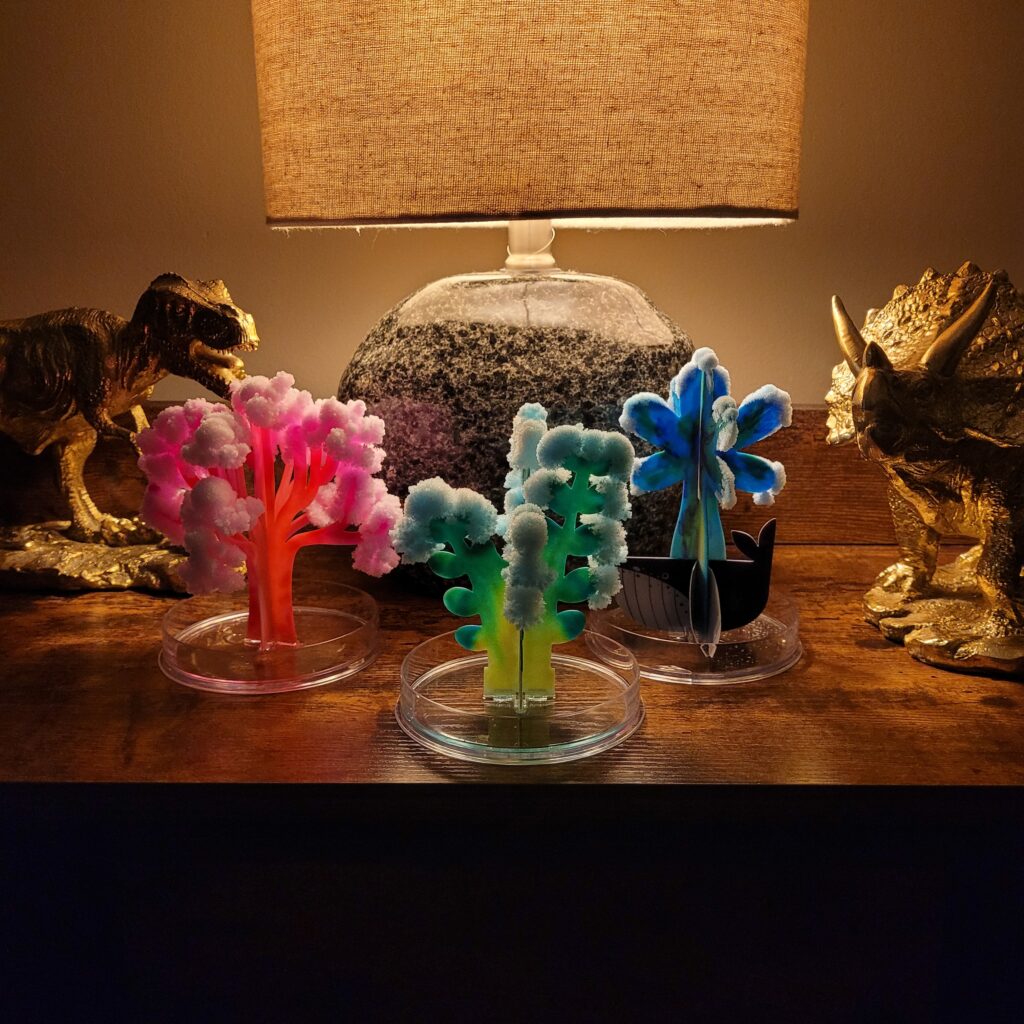
What are the key takeaways from this Deep Sea Grow Experiment?
The setup took about one to two hours, with the overall painting of the cardboards, setting them up in the petri dishes. The first appearance of crystals was after a about eight hours. It is recommended to not move them, and keep them at the room temperature overnight. It was a really exciting experiment for amateur beginners in science. And I don’t care how old you are, if you have an itch for science and exploration, then follow your gut and start exploring!
Nyx Log, Stardate 26002.01

Leave a Reply