

How Old is the Universe? A Biblical Approach by Irish Archbishop James Ussher
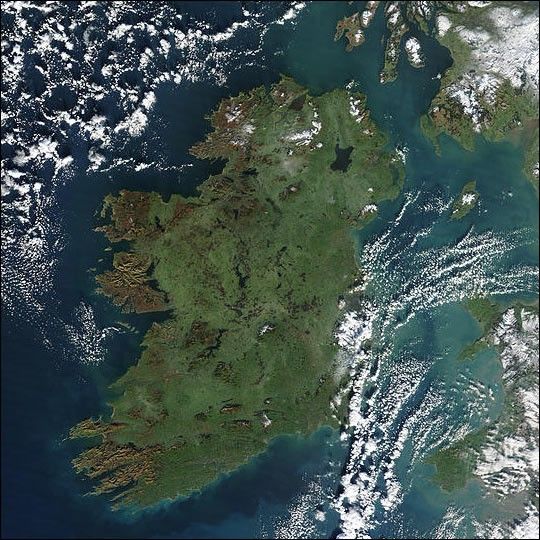
Ireland has a rich history of scientific contributions that have helped shape our understanding of the world around us. You might not have heard of many of them, or you may struggle to name a famous Irish scientist, but don’t worry, as I often publish articles inspired by the work or many brilliant Irish Scientists. Let’s talk about one of them.
Let’s discuss the age of the Universe. Have you ever looked at the sky and wondered how old is the cosmos? Or when were all the stars, the Sun, the Moon, and all else born?
At the present moment
As of today, scientists calculated the estimate age of the universe to be around 13.8 billion years old. That is when we believe the Big explosion called the Big Bang happened an the universe came into existence. And this is what we calculated now thanks to decades of research and measurements. But back in the 16th century, people did not speak about the age of the universe in billions, but rather it was believed to be only a mere few thousands of years old.
The 16th Century
This century was heavily dominated by religion, which means the age of the universe was then believed to be linked to biblical events. And so in the 16th century the universe was believed to be roughly 5,500–6,500 years old.
- In 1620, Irish Archbishop James Ussher proposed the precise date of the Creation of the world to be 4004 BC by counting backward from the time of Jesus all the way to Adam himself using biblical genealogies and historical records. Meaning, the universe was believed to be roughly 4,500-5,600 years old during the 16th century.
- Mind you, this was a century in which geocentrism was dominating the stage (the idea that the Sun, Moon, planets, and stars revolved around Earth. Nicolaus Copernicus, a Polish astronomer proposed a heliocentric model, where the Sun, not the Earth, is at the centre. Copernicus’ idea was controversial and not so quick to be accepted).
There you can see, that as time continued to travel forward, so too did the belief that the world began in 4004 BC, as scientists had no basis on which to make a different proposal.
- Soon after Ussher published it (1650), his chronology was widely accepted in Protestant Europe and the English-speaking world.
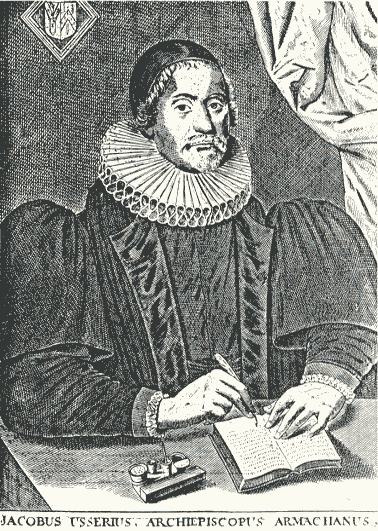
Img. Source: Wikipedia
17th Century
Even at the beginning of the 17th century, many editions of the King James Bible printed Ussher’s chronology in the margins at the beginning of Genesis—making 4004 BC appear as a learned “official” date to many readers.
So, for roughly 100–150 years after his work, many educated Europeans assumed his calculation was authoritative because it was tied to scripture and respected scholarship of the time.
But what about the fossils we find high on top of the mountains? Although Leonardo Da Vinci never shared his work on fossils, he analyzed marine fossils picked from the top of mountains and realized that sediment layers formed slowly over long periods, much longer than the current suggested age of the universe.
18th Century
In the 1800s, more evidence from geology and paleontology showed Earth was far older than a few thousand years.
- As scientific disciplines matured, Ussher’s date became understood as a theological estimate, not a scientific fact. Geologists in particular actively argued against the idea of a ~6000-year-old Earth.
19th Century
During the 1800s, many scientists no longer believed the universe was only a few thousand years old, but many people still did. The theory by Archbishop James Ussher where in 1650 he proposed that creation occurred in 4004 BCE. But during this century, research has advanced in many fields, including geology, biology and physics, where scientists believed in a much longer timeline
- In the late 18th century, two Geologists James Hutton and Charles Lyell argued that geological processes were slow and continuous. Rock layers, erosion, and fossils implied vast spans of time, far beyond thousands of years.
- Charles Darwin believed that the universe is hundreds of millions years old. In his book “On the Origin of Species” (1859), Darwin required immense time for natural selection to operate.
- Lord Kelvin (late 19th century) suggested the Earth was 20–100 million years old, although he was still incorrect by modern standards, the timeline was still much longer than the biblical chronologies.
Fast Forward to the 20th Century:
- By the 20th century, the age of Earth (around 4.5 billion years) and the universe (approx.13.8 billion years) was well established. Ussher’s date became mainly a historical curiosity and a symbol of how early scholars tried to date the age of the universe with the knowledge they possessed.
Thinking back, Usher made an impact by applying the knowledge that existed during his time – he used the best sources available to him: the Bible, ancient histories, genealogies, and calendars. But science and technology has taken a great step forward, and with every theory or speculation, we test to prove if it is wrong.
Nyx Log, Stardate 26001.22
Thank you, I hope you enjoyed the article. Please note, I carefully research the topic before publishing, however some facts could have changed since publishing this article, so I appreciate your understanding. All articles published are thoroughly researched and inspired by published books. The list of resources are published in every article. Please be kind, and have a nice day.


Leave a Reply