

What is Gravity?
What is Gravity?
- Gravity is a force of attraction that pulls objects together.
- Gravity is found everywhere, it’s all around us, in the air, space, and inside matter – wherever there is mass there is gravity.
- Gravity is one of the four forces of nature, it is also the weakest force (unless you have a lot of matter).
- Just like electromagnetism, gravity is a long-range force.
- Isaac Newton was the first to propose gravity as a universal force.
The story of gravity is deeply tied to Einstein’s Theory of Relativity (1915-1916). Einstein realized that the gravitational field is not something separate from space — it is the curvature of spacetime itself. Even after more than a century, General Relativity remains our best theory of gravity.
What is Gravity Made of?
- Gravity isn’t made of anything. It is simply a result of spacetime curvature. Where spacetime is more curved, gravity appears stronger; where spacetime is flat, gravity effectively vanishes.
- Physicists are still searching for a quantum theory of gravity, which might involve a hypothetical particle called the graviton.
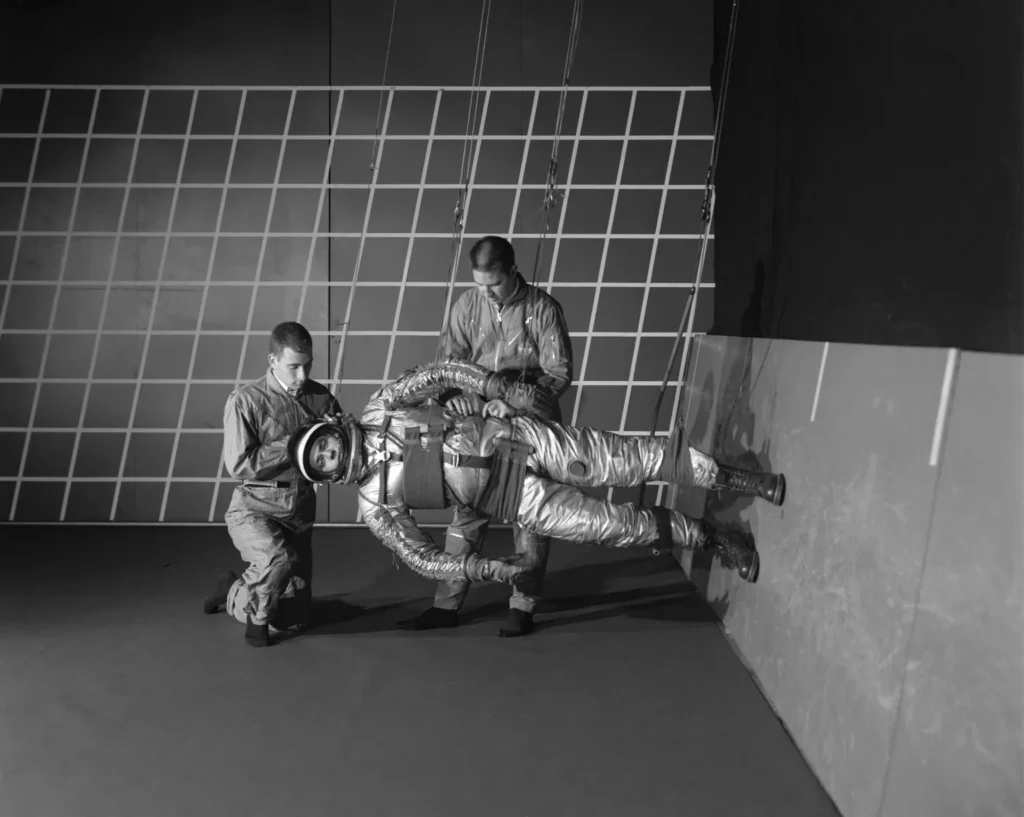
What is the Purpose of Gravity?
- Gravity always tries to bulk matter together. It attracts and holds planets, galaxies, and even light in curved paths.
- Gravity is simply the result of the warping of space and time.
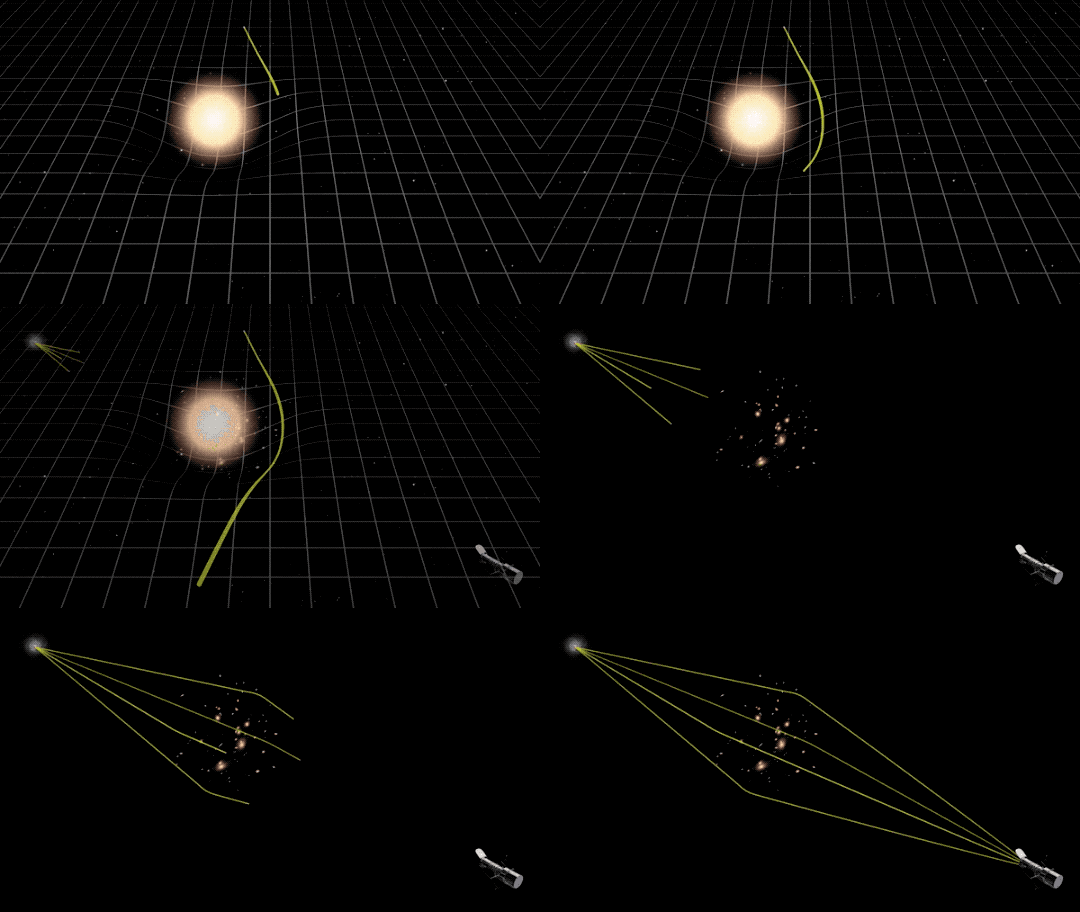
- Gravity interacts with everything that has energy — including light, although light isn’t “slowed down” by gravity, it’s bent by curved spacetime.
- In stars, gravity constantly pulls inward, trying to cause collapse. The star remains stable as long as the outward pressure from hot gas and nuclear fusion balances the inward pull of gravity.
- To understand black holes, we need to understand gravity.
When that balance fails, the star collapses — sometimes forming a black hole, where gravity becomes so strong that not even light can escape.
Some Phenomena of Gravity
- Gravitational lensing occurs when a massive object (like a galaxy or cluster) warps spacetime so much that it bends the path of light from objects behind it, causing them to appear distorted, magnified, or multiplied.
- Gravitational time dilation — time runs more slowly in stronger gravitational fields. This is true. The stronger the gravity, the slower time runs relative to places with weaker gravity. This has been confirmed using atomic clocks on Earth’s surface and in orbit. So, a clock closer to Earth’s surface ticks slightly slower, and a clock farther away in space ticks slightly faster. This is known as the Gravitational time dilation and is one of the phenomenas we see most visibly near massive objects like black holes or neutron stars.
Newton’s Law of Gravitation – Is it Correct?
Well, Newton was born before Einstein, and back then people believed that space was flat. So did Newton. But that doesn’t mean he hasn’t contributed the the work on gravity. His work and formula needed to be updated or enhanced.
As Richard Feynman said in Six Easy Pieces:
“Newton’s law of gravitation is not correct. It was modified by Einstein to take into account the theory of relativity. According to Newton, the gravitational effect is instantaneous, which is not the case according to relativity where the speed of gravity is limited to the speed of light”.
If gravity is a force of attraction, does it mean it binds atoms together? Is my body glued together because of gravity? The simple answer is no. The forces that bind atoms are electromagnetic and nuclear, not gravitational.
Irish Science Section – Did You Know?
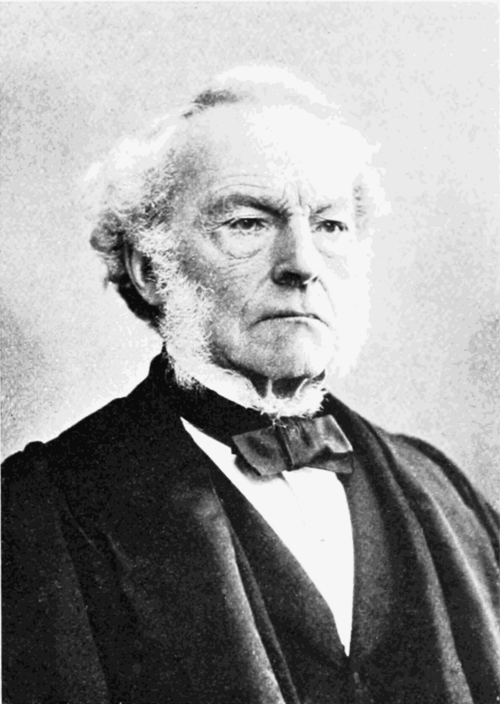
Irish Scientists and Gravity – Sir George Gabriel Stokes
While we learned that the core of the theory of gravity was mainly developed by Isaac Newton and Albert Einstein, a few Irish scientists made contributions that helped advance our understanding of gravity. One of them was Sir George Gabriel Stokes, an Irish physicist born in Skreen, County Sligo.
- Stokes made major contributions to fluid dynamics, optics, and fluorescence. He also became the 35th President of the Royal Society.
- In 1851, Stokes developed what is now known as Stokes’ Law, which describes the drag force on a small spherical object moving through a viscous fluid:
Fd=6πηrvF_d = 6 \pi \eta r vFd=6πηrv
Where:
- FdF_dFd = drag force
- η\etaη = viscosity of the fluid
- rrr = radius of the sphere
- vvv = velocity of the sphere
Although this is not a formula for gravity, it is used in gravitational-related studies such as sedimentation and particle settling, which involve gravitational effects.
Stokes’ law (and the gravity relationship derived from it) is used in:
- 🪨 Geology & Environmental science — to understand soil particle or pollutant settling rates.
- 🧪 Sedimentation studies — to calculate how fast particles settle in liquids.
- 🌫️ Aerosol science — to study how dust or droplets fall through air.
- 💧 Rain formation — to estimate how fast raindrops fall through the atmosphere.
- 🧬 Viscosity measurements — in laboratory experiments using falling spheres.
Mystery
- We still don’t fully understand what happens at the final stage of gravitational collapse.
What happens to gravity inside a black hole, or at the singularity, remains one of the biggest mysteries in physics.
Resources
- Six Easy Pieces – Richard Feynman
- Why Does E=mc²?– Brian Cox & Jeff Forshaw
- Spacewarps – John Gribbin
- Introduction to Black Hole Physics – by V. Frolov and I. Novikov
Thank you, I hope you enjoyed the article. Please note, I carefully research the topic before publishing, however, some facts could have changed since publishing this article, so I appreciate your understanding. All articles published are thoroughly researched and inspired by published books. The list of resources are published in every article. Please be kind, and have a nice day.
Nyx Log, Stardate 25010.7


Leave a Reply