

What is Time? When Did Time Begin?
“A mystery is only a mystery as long as it remains uninvestigated, sir.“
– Data, Star Trek: The Next Generation
What Is Time?
In everyday life here on Earth, time can be seen as an invisible straight arrow on which we track when events in our lives occur. Our clocks measure how long an event lasts using familiar units like seconds, minutes, and hours.
Time vs. Spacetime
It’s important to understand that time is viewed differently in science.
- In physics, space is three-dimensional, and spacetime is four-dimensional—if we treat time as an additional dimension.
- To understand “spacetime,” physicists Brian Cox and Jeff Forshaw explain it clearly in their book Why Does E=mc²? :
“What we have to do is treat time as an additional dimension. Space has three dimensions: left-right, up-down, and forward-backward. When we try to add time into space, we create four coordinates and a four-dimensional space.”
So why treat time as a dimension?
- In the early 20th century, the mathematician and physicist Hermann Minkowski argued that space and time are not independent but form a unified whole.
- In 1908 (a few years after Einstein’s 1905 paper on Special Relativity), Minkowski formally introduced the idea of four-dimensional spacetime—a geometric framework that supports and extends Einstein’s theories. – We’ll cover Einstein’s contributions to time and relativity in another article.
When Did Time Begin?
No one knows exactly when time began. Humans weren’t handed a cosmic manual on how to manage it — unfortunately! Because if I had one, I’d travel back in time and bet on Manchester United’s winning streaks. (I know, right?)
Before the invention of clocks and telescopes, people tracked time using natural cycles — the changing of seasons, birth and death, and the motions of the Sun and our Moon. Over the centuries, as Christianity became dominant in Europe, scholars sought to connect biblical events to the world’s history.
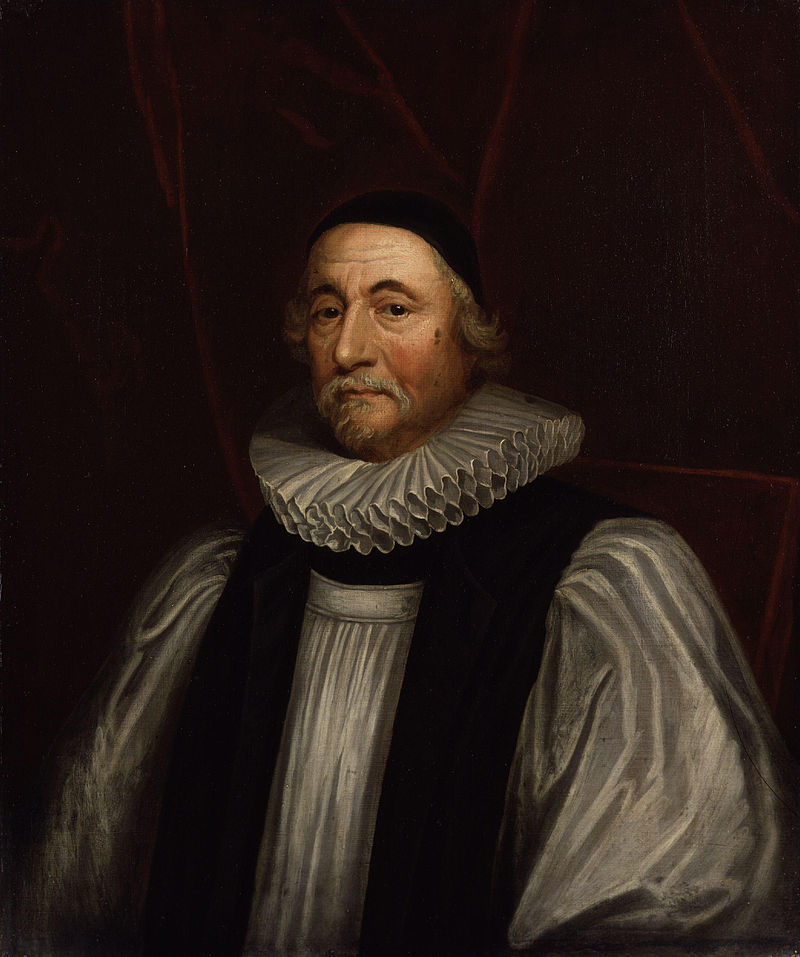
Irish Science Fact – Did You Know?
- In 1620, Irish Archbishop James Ussher proposed the precise date of the Creation of the world to be 4004 BC by counting backward from the time of Jesus all the way to Adam himself using biblical genealogies and historical records.
As time continued to travel forward, so too, did the belief that the world began in 4004 BC, as scientists had no basis on which to make a different proposal.
But what about the fossilized species found in rocks? How did the remains of diverse species get fossilized in the first place, and, can someone explain how these fossils are found high above the sea levels, like the mountains? Clearly there was a need for a longer timeline, and we are talking a much longer timeline.
Centuries went by, and with them more theories on the age of the universe. Until one moment, in 1770s, a French mathematician and cosmologist Comte de Buffon proposed that the origin of our planet formed from a ball of molten material and estimated that it would take around 36,000 to 75,000 years to cool down into a solid state it is today. Theologians back then did not like this proposed number.
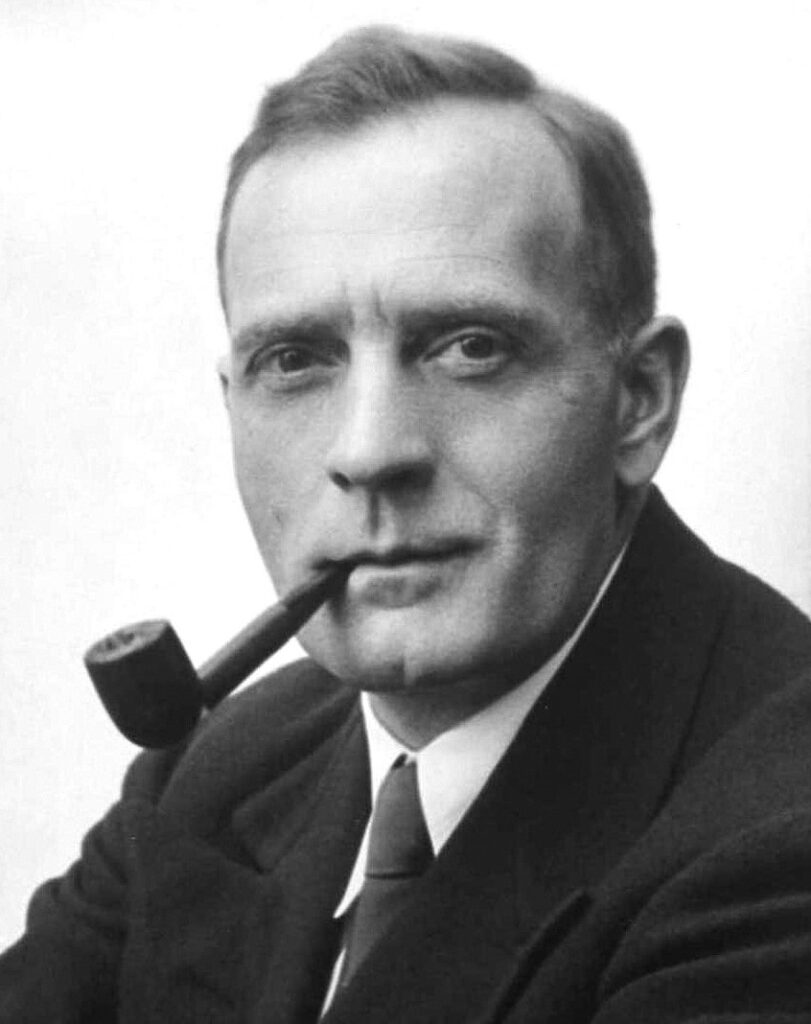
The eighteenth and nineteenth centuries too, had some of the finest scientists calculating and brainstorming about how we could find out the exact date of the Universe, and thus, time itself. Some famous names like pop up in those centuries, such as Edwin Hubble and his proposal of the age of the universe to be around 2 billion years.
Fast forward to our century and what we know about the age of time is through an event called the Big Bang. One possibility is that time started at the Big Bang event and simply did not exist before. Scientists have roughly narrowed down the Big Bang event to have occurred around 13.8 billion years ago thanks to powerful telescopes, such as the Hubble Space Telescope, which tracks the expansion of the universe using redshift — the stretching of light toward the red end of the spectrum.
Is time infinite?
There is no precise answer to that, but if I were to quote Jeremy Rifkin’s from his book Entropy: A New World View:
“The most important thing that the thermodynamics teaches us, is that nothing lasts forever. All things must pass, and everything wears out.”
On the other hand, a British astronomer named Fred Hoyle believed that the Universe may be infinite in time and space (a theory he proposed in 1948 called the “Steady State Theory”), whereas in 1957, an American physicist Hugh Everett suggested that there is an infinite variety of worlds across the Universe (a theory known as the “Many-Worlds Interpretation”)
Can we go backward in time?
In theory, yes. If we were to consider time as a dimension, then Special Relativity theory by Einstein would allow time to flow differently for different observers. With a curved spacetime in mind, we can hypothesize a wormhole, which could hypothetically take me away from my desk and back to 20 years ago, when my existential crisis was non-existent. But for now, we do not have such wormholes.
Where does time not exist?
To quote Stephen Hawking from his book Brief Answers to Big Questions:
“Inside a black hole time does not exist. Gravity can warp space and time.” We do not know what is going on inside a black hole in full detail but Hawking’s idea is thought-provoking.
Resources
The topic was inspired by various books:
- The Quantum Labyrinth by Paul Halpern
- Why Does E=mc²? by Brian Cox & Jeff Forshaw
- Black Holes and Baby Universes and Other Essays by Stephen Hawking
Thank you, I hope you enjoyed the article. Please note, I carefully research the topic before publishing, however some facts could have changed since publishing this article, so I appreciate your understanding. All articles published are thoroughly researched and inspired by published books. The list of resources are published in every article. Please be kind, and have a nice day.
Nyx Log, Stardate 25081.3


Leave a Reply