What is a Kaleidoscope?
Sometimes old inventions never fade away. This is true with kaleidoscopes. A simple object made to satisfy your optical senses with geometrical images created right in front of your eyes. But how does a kaleidoscope really work and when was it invented?
A kaleidoscope is an optical instrument, which creates geometric patterns and symmetries when you look through it. Using angled mirrors, the image is creating beautiful patterns with the help of light coming through one end of the tube.
What is a Kaleidoscope made of?
A kaleidoscope is made of a few simple items and is a also great project you can try at home. Here are some of the pieces most kaleidoscopes are made of:
- 🧪 Tube: Often made of cardboard, metal or wood.
- 🔵 End Cap: One end of a tube is a cap covered with transparent plastic or frosted glass.
- 🔎 Eyepiece: A small viewing hole at the opposite end of the tube.
- 🪞Mirrors: 2 or 3 long mirrors placed at a 60° angle.
- 💎 Small Objects: Such as coloured glass, gemstones, or beads. These are placed inside the end cap.
How does a Kaleidoscope Work?
Kaleidoscopes are simple yet clever objects, and you can create your own kaleidoscope using simple home items. How do we know it works? Here is what happens:
- Light Enters – When you point the kaleidoscope toward a light, multiple things happen:
- Light enters through the coloured pieces (if you added beads, the light will pass through them).
- The light then hits the mirrors, which are facing each other and are at an 60 degree angle. The light will bounce back and forth.
- When you start turning the tube, you will have many variations of images, because the beads are loose and create new patterns every time. Beautiful geometry and symmetry created right in front of you.
Why does a Kaleidoscope create Symmetry?
Well, because there are multiple mirrors involved, the reflection repeats the image multiple times. These reflections join together in a symmetrical pattern. By angling the mirrors at 60 degrees, we can produce geometrical shapes. Mirrors in a classic kaleidoscope are most commonly set at a 60-degree angle, forming an equilateral triangle. Sixty degrees also divides perfectly into 360 degrees (six times), creating beautiful, symmetrical six-sided hexagonal patterns.
If the mirrors were adjusted at a different angle, then you would get a distorted and broken image. This is due to the law of reflection: The light hits an angled mirror which equals to the angle it reflects, 60 degrees in this case.
I’ll think of an example. What if I adjust the mirrors to be at 70 degrees instead or 60, what happens then? Well, I will get a distorted image, a broken pattern with no symmetry. This is due to the fact that 360 degrees is not perfectly divisible by 70.
The mathematical rule for calculating is: Dividing 360 degrees by 70 degrees – which equals 5.14. This means you will see 5.14 images inside your kaleidoscope when you set the mirrors at a 70 degree angle. In order to have beautiful and symmetrical shapes, try adjusting your mirrors at an angle that is easy to divided into 360 degrees.

Who Invented the Kaleidoscope?
- In 1816, Sir David Brewster, a Scottish physicist and mathematician invented the first kaleidoscope. He discovered the kaleidoscope while experimenting with light polarization and reflections using mirrors.
- Brewster discovered that angling the mirrors at 60 degrees produced these amazing symmetrical patterns. Here is where we can highlight the wonders of the law of reflection: The angle light hits a mirror which equals to the angle it reflects, 60 degrees in this case.
- His kaleidoscope invention was a big hit and he became quite popular. So much so, that his face was printed on a cigar box.
Where to Get One?
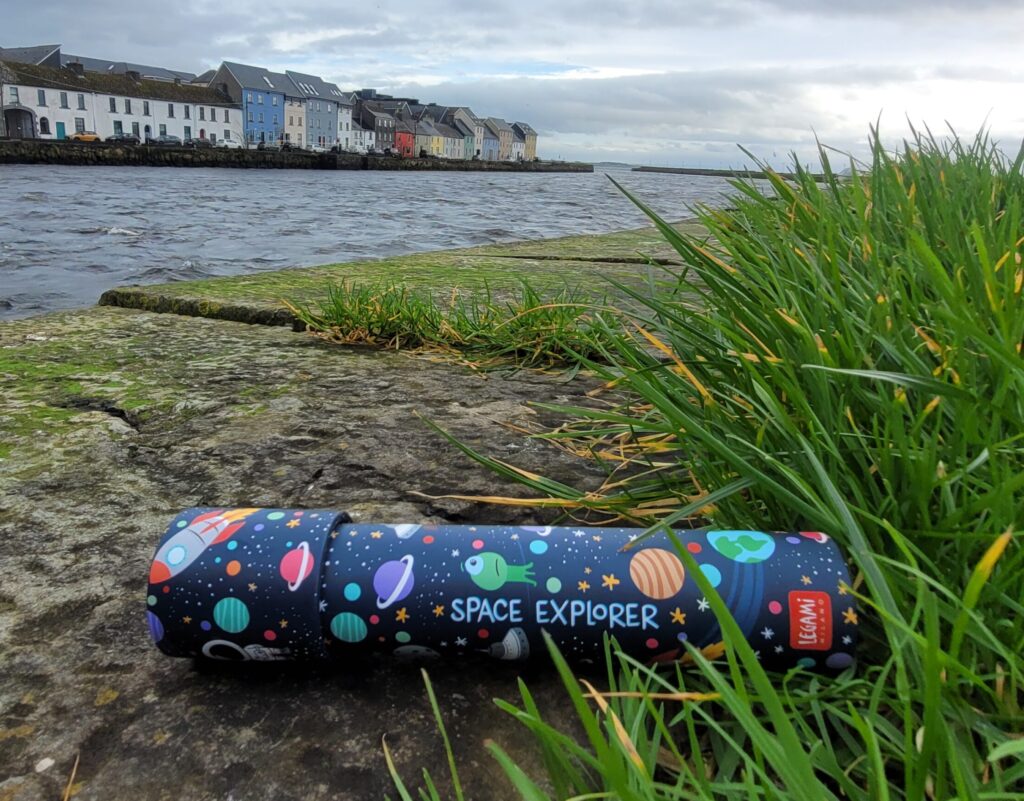
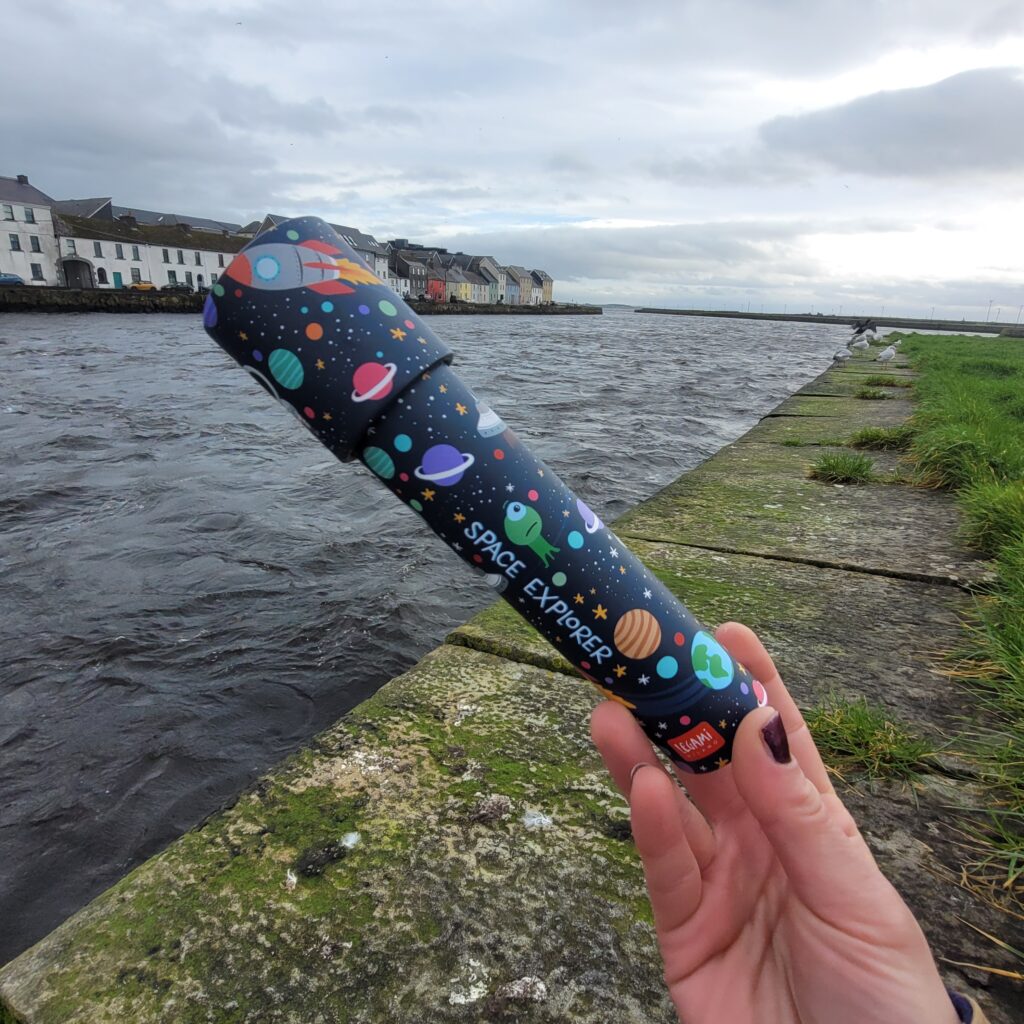
Kaleidoscopes are available in many stores, and I found mine in Easons, on Shop Street in Galway. The tube is space-inspired and the colourful beads inside do provide satisfying geometrical images. I bought mine for €6.99.
Final Notes
Thank you, I hope you enjoyed the article. Please note, I carefully research the topic before publishing, however some facts could have changed since publishing this article, so I appreciate your understanding. All articles published are thoroughly researched and inspired by published books. The list of resources are published in every article. Please be kind, and have a nice day.
Nyx Log, Stardate 26003.02


Excellent writing, easy to understand and apply.